Capítulo 1: Secuelas de una pandemia: El aula invertida en escenarios virtuales de aprendizaje en el ámbito de la educación tecnológica
Sinopsis
Durante la pandemia de la COVID- 19, la educación superior enfrentó el reto de migrar de la presencialidad a la virtualidad, lo que transformó profundamente los procesos de enseñanza y aprendizaje en carreras como Ingeniería. El presente trabajo tiene como objetivo analizar el impacto de la implementación de la metodología de Aula Invertida en los cursos de Cálculo Diferencial y Cálculo Vectorial de los primeros semestres de Ingeniería Electrónica en el Tecnológico Nacional de México. Se tomó como base de estudio una Metodología de investigación de corte empírico-analítica con enfoque descriptivo, buscando presentar la experiencia trabajando con plataformas LMS y la metodología activa llamada aula invertida para el desarrollo de competencias profesionales. Los resultados muestran que el aprendizaje híbrido puede potenciar la autonomía y el ritmo propio de los estudiantes, aunque exige del docente mayor rigor y planificación para evitar riesgos de desvirtuar la experiencia formativa. Finalmente, se concluye que toda metodología no constituye una solución absoluta a los problemas educativos, esta debe contextualizarse a las demandas sociales y productivas de cada región.
Descargas
Páginas
37 - 66
Publicado
junio 30, 2025
Colección
Derechos de autor 2025 Editorial Sinergy
Licencia

Esta obra está bajo una licencia internacional Creative Commons Atribución-NoComercial-CompartirIgual 4.0.
Cómo citar
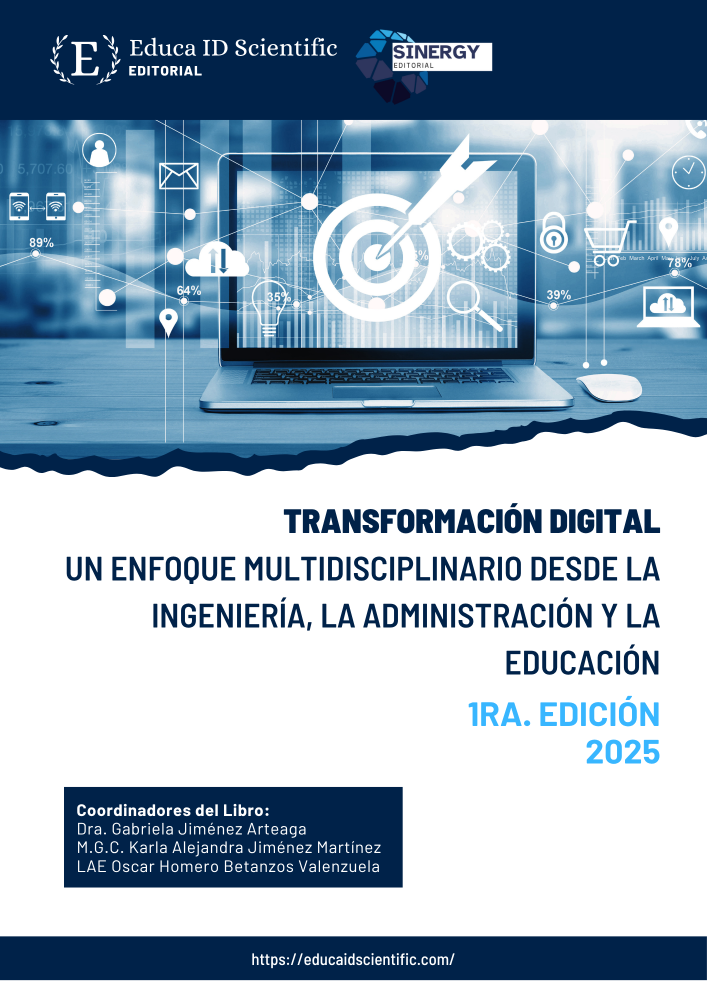
Torres Reyes, R., & Rodríguez Montufar, G. (2025). Capítulo 1: Secuelas de una pandemia: El aula invertida en escenarios virtuales de aprendizaje en el ámbito de la educación tecnológica. In G. Jiménez Arteaga, K. A. Jiménez Martínez, & O. H. Betanzos Valenzuela (Eds.), Transformación Digital: Un Enfoque Multidisciplinario desde la Ingeniería, la Administración y la Educación (pp. 37-66). Editorial Sinergy. https://doi.org/10.5281/zenodo.17329423